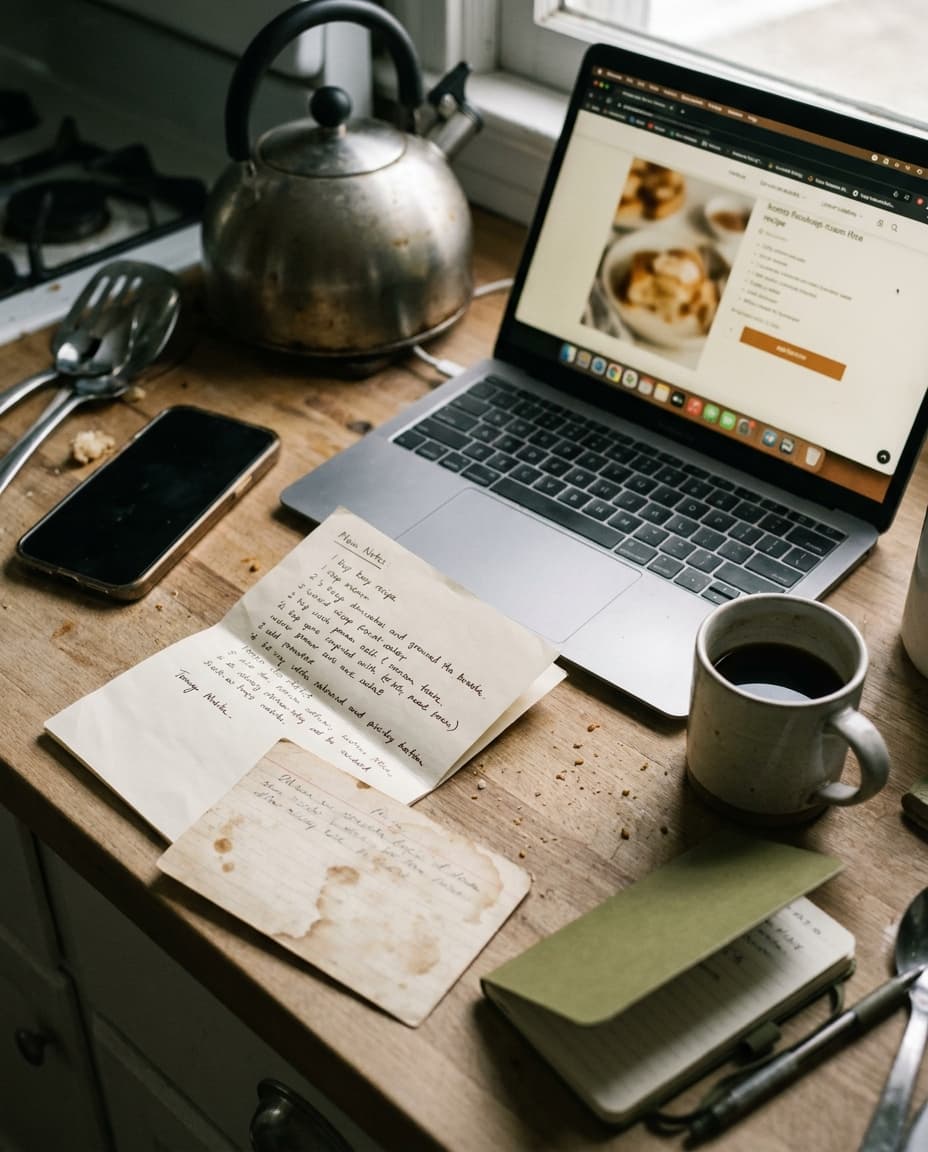
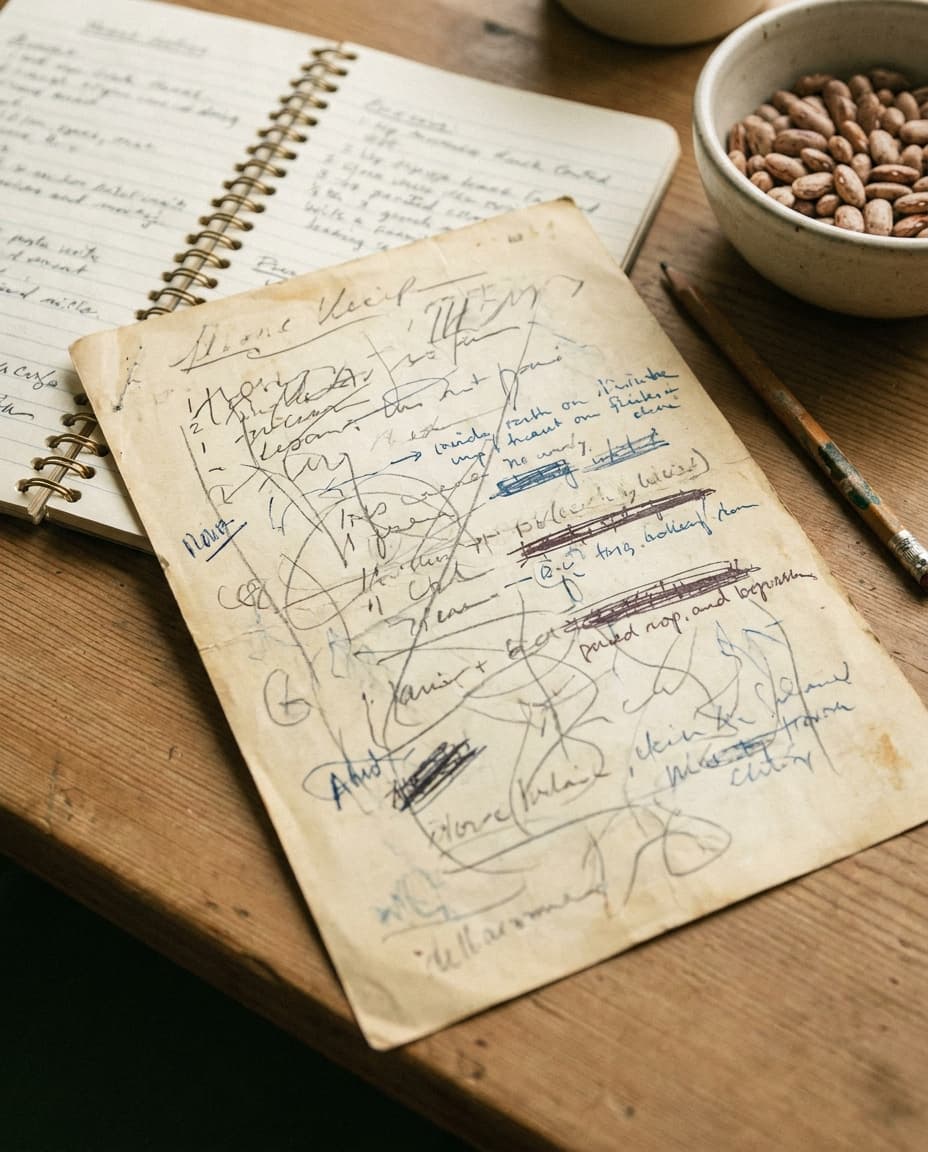
There is a recipe I have been trying to file for the better part of a year. It is a Vietnamese rice-paper cold roll — gỏi cuốn, more or less, with a peanut-hoisin sauce on the side, the kind that gets sticky on the rim of the bowl by the time the second person reaches for it. I learned it in a borrowed kitchen in Da Nang in 2019; I have made it perhaps forty times since; and I cannot, no matter how many evenings I spend with the recipe app open and the folder list scrolling, decide where to put it.
The folders I have, at present, are these: Asian, Vietnamese, Snacks, Summer, Lunch, Light, Vegetarian, and a folder called Things I Make For Guests Without Thinking. The cold roll is, defensibly, all of these things. It is Asian. It is Vietnamese. It is a snack. It is a summer dish. It is a lunch. It is light. It is, with the right peanut sauce, vegetarian. It is, more than almost anything else, a thing I make for guests without thinking. To put it in any one folder is to commit to a small lie about what the dish is.
§ I.What the folder asks of you.
A folder, as an organising structure, makes a single demand: you must know, at the moment you save the thing, where you will later look for it. This is a reasonable demand for a tax return, which has a year and a category and lives in exactly one place forever. It is an unreasonable demand for a recipe, which has a cuisine and a season and an occasion and a difficulty and a dietary profile and a mood, and which you will look for, six months from now, by whichever of those happens to be on your mind.
The folder is hierarchical. It is one parent, one child. It is the filing cabinet — a metaphor that arrived in software in the late nineteen-eighties, modelled on the actual filing cabinets that sat behind the actual desks of the actual people who would later become the first computer users. The metaphor was useful because it was familiar. It is no longer useful, in this context, because the thing being filed is not a single-axis document. A recipe is multi-axis by nature, and a single-axis storage system will, eventually, fail it.
§ II.What the tag understands.
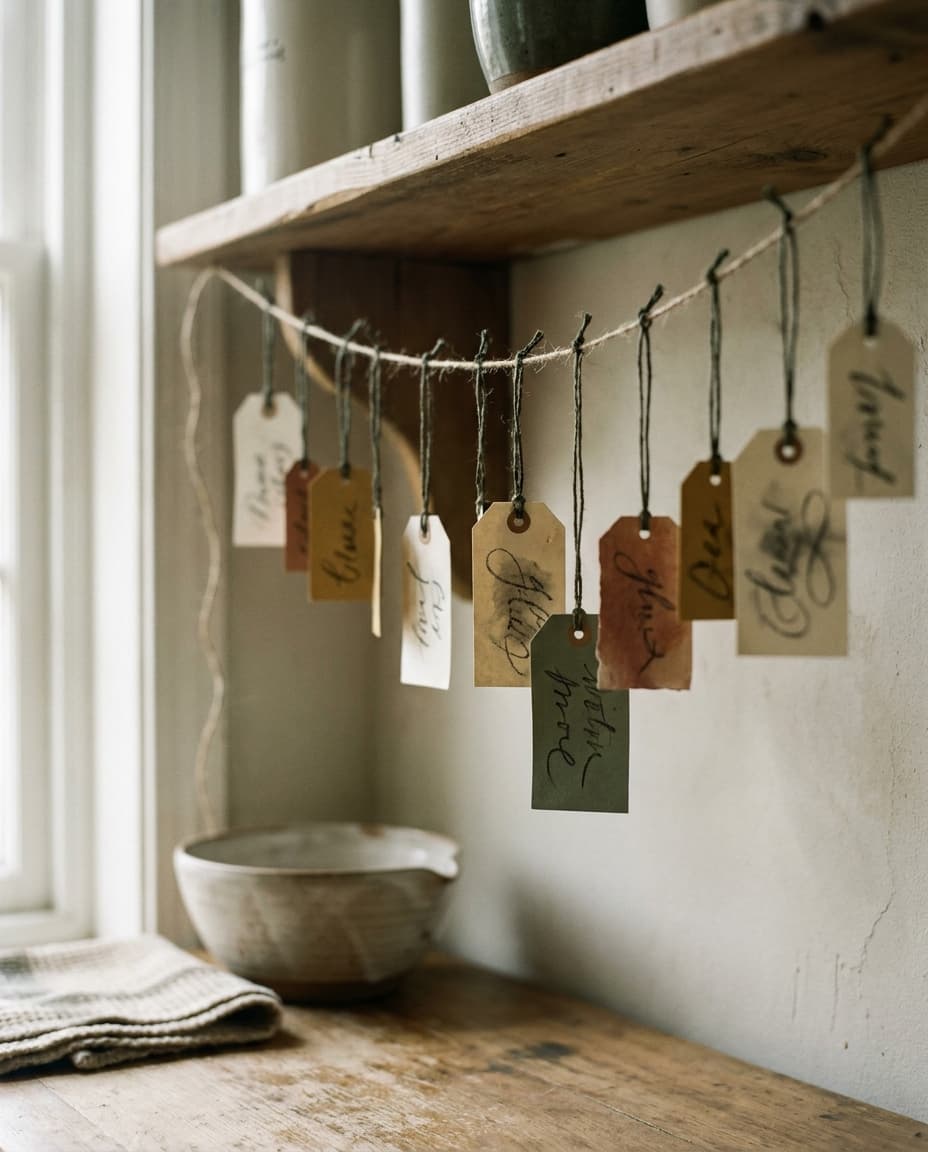
A tag, by contrast, makes no commitment. The cold roll can be tagged Vietnamese and Asian and Snack and Summer and Light and Vegetarian and Guests, all at once, and none of those tags pretends to be the dish's true home. The tags are, instead, handles — multiple handles on the same object, any one of which I can grab when I am next looking for it. If I open the app on a hot Tuesday in July and think "something light," the tag finds it. If I open the app on a Thursday because friends are coming over, the tag finds it. If I open the app because someone has asked what I make from Vietnam, the tag finds it. The dish has not moved. My access to it has multiplied.
There is a deeper point here about how libraries should age. A folder system is a bet you place at the moment of saving — a bet about what your future self will be looking for. Most of those bets, made by your past self at six in the evening on a Tuesday with a half-poured glass of wine, will turn out to be wrong. Your future self will be looking for something the folder has no name for. A tag system, because it does not make the bet, cannot lose it. The library accumulates handles instead of accumulating commitments, and the handles compound.
Folders ask your past self what your future self will want. Tags admit your past self has no idea.
§ III.Where Basil sits, and why I keep returning to it.
I use three recipe apps daily, mostly out of curiosity, and I have used many more historically. Basil is the one whose organisational model has aged best in my hands. The library is tag-first — every recipe carries as many tags as you want to give it, with no folder commitment required at the moment of saving. The cold roll lives, in my Basil library, under seven tags. It is in none of them, and in all of them, at the same time. The full-text search on top of the tag layer means that even the things I have not tagged — a passing reference to peanuts in the notes field, the word "summer" in the headnote — are reachable. The library does not require me to remember how I filed something. It only requires me to remember something about what it was.
The folder option exists in Basil, for those who want it, but the system does not push you into it. You can add a recipe with no tags, no folder, no nothing, and find it again three weeks later by typing "peanut" into the search field. This is, I think, what a recipe library should feel like in 2026 — not a filing cabinet you maintain, but a haystack with very good magnets.
§ IV.The decade test.
The argument for tags only really lands when you imagine your library at ten years old. Five hundred recipes, accumulated across a decade of cooking, three apartments, two cities, one significant change in dietary requirements, and the slow drift of taste that happens to all of us between thirty and forty. A folder system, at that scale, becomes a museum of your past taxonomies — the folder called Paleo from the year you tried that, the folder called Whole30 from the month you tried that, the folder called Quick Weeknight Meals which has long since stopped meaning anything because every recipe in it takes ninety minutes.
A tag system, at that same scale, is messier on the surface and more functional underneath. You will have tags you stopped using. You will have tags that overlap. You will, occasionally, have to do a small piece of weeding. But the recipes themselves remain reachable along whichever axis you are searching today, which means the library remains usable as your taste, your household, and your kitchen change around it. The folder library hardens. The tag library stays soft. Soft, in the case of a thing you will be using for the next twenty years, is the better property.
The cold roll, in the end, does not need to be filed. It needs to be findable. It is findable by season, by cuisine, by occasion, by the word "peanut," by the half-remembered fact that I learned it in Da Nang. None of these is the dish's true name. All of them are doors. The library that gives me the most doors wins, almost always — and the library that asked me to choose, at six in the evening on a Tuesday in 2019, which single door the dish would live behind, has long since lost the cold roll to a folder I no longer remember opening.